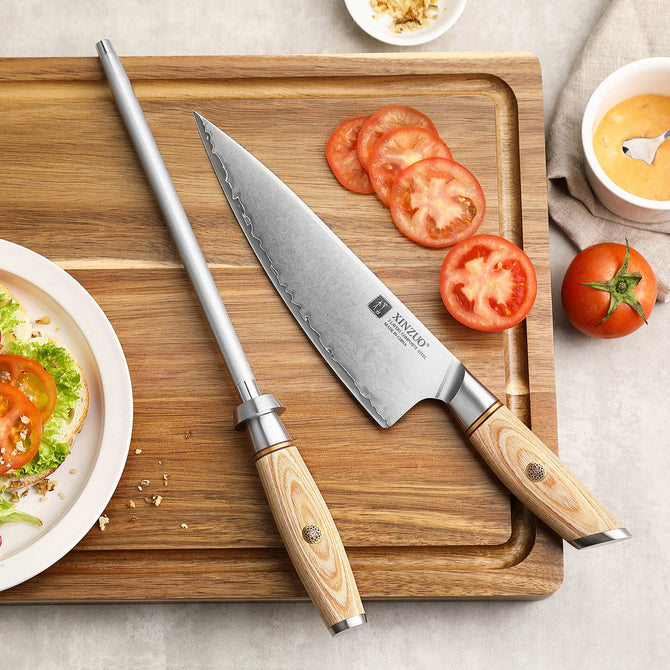
Maintaining the sharp edge of a knife is crucial for effective and safe usage in any kitchen. A steel honing rod is an essential tool that helps in keeping the knife’s edge aligned and ready for use. While often confused with sharpening, honing is a different process that involves realigning the blade’s edge rather than removing material to create a new edge. Understanding how to use a steel honing rod can significantly extend the life of kitchen knives and improve their performance.
Understanding the Difference: Honing vs. Sharpening
Before diving into the honing process, it is important to distinguish between honing and sharpening:
- Honing: This process realigns the blade’s edge, correcting any minor bends or imperfections. It does not remove metal from the blade.
- Sharpening: Involves grinding away metal to create a new, sharp edge. Typically done with whetstones or electric sharpeners.
Both processes are vital, but honing should be done regularly, while sharpening is needed less frequently. Discover expert strategies here.
Step-by-Step Guide to Using a Steel Honing Rod
1. Gather Your Materials
To begin honing, ensure you have the following:
- A quality steel honing rod, ideally one that matches the length and type of your knives.
- A clean, stable surface or cutting board to work on.
- Your knife, ideally one that has been cleaned and dried.
Explore advanced guides and tips for selecting the right honing rod here.
2. Position the Honing Rod
Hold the honing rod vertically with the tip resting on a cutting board or another firm surface. Ensure it is stable and secure before proceeding. Your grip should be firm, but comfortable, allowing for controlled movements.
3. Align the Knife
Place the heel of the knife at the top of the honing rod, angling the blade at approximately 15 to 20 degrees. This angle is crucial for effective honing. For different knife types and angles, find out more about this approach here.
4. Execute the Honing Stroke
With a steady hand, draw the knife down the rod, ensuring the entire edge comes into contact with the rod. Maintain the angle as you move from the heel to the tip of the knife. Repeat this motion on the other side of the blade, alternating sides with each pass.
5. Repeat and Test
For optimal results, complete approximately 5 to 10 passes on each side of the blade. After honing, test the knife’s sharpness by slicing through a piece of paper or a tomato. If needed, repeat the process. Learn about our tailored solutions for effective honing here.
Benefits of Regular Honing
Regular honing offers several advantages:
- Keeps knives sharper between sharpenings, extending the time between full sharpening sessions.
- Preserves the blade’s integrity, reducing wear and tear.
- Enhances cutting efficiency, making kitchen tasks quicker and safer.
Explore advanced guides and tips on maintaining knife sharpness here.
Conclusion
Incorporating the use of a steel honing rod into your regular kitchen routine can vastly improve the longevity and performance of your knives. By understanding the difference between honing and sharpening, and applying the correct techniques, one can achieve a consistent and precise edge. For those looking to enhance their knife maintenance skills, additional resources and products can be explored here.